AI is an environment problem too
A coding agent may need far more than a compiler. Browser binaries, MCP servers, model files, tokenizers, GPU libraries, datasets, indexes, and utility binaries are all inputs that can make one sandbox behave differently from another. Basecamp's environment graph is intended to make these inputs explicit and reproducible instead of downloading them ad hoc during agent execution.
Resource families
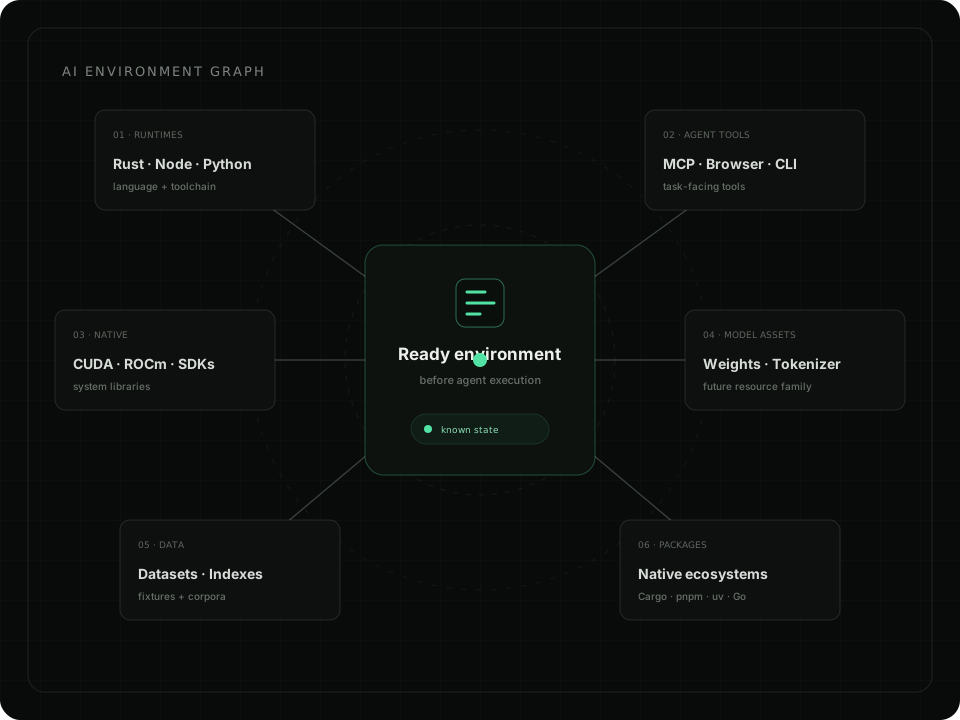
| Family | Examples | v0.5 status |
|---|---|---|
| Language runtimes | Rust, Node, Python, Go | Rust shipping; others roadmap |
| Package sets | Cargo, npm/pnpm, uv/pip, Go modules | Cargo shipping; others roadmap |
| AI model assets | weights, tokenizers, adapters, embeddings | Environment-model target |
| Agent tools | MCP servers, skills, browser tooling, static binaries | Environment-model target |
| Native / GPU | CUDA, ROCm, compiler SDKs, system libraries | Environment-model target |
| Data | datasets, indexes, fixtures, test corpora | Environment-model target |
Agent-native without becoming an agent framework
Basecamp should make the environment understandable to automation: deterministic locks, machine-readable schemas, status, and doctor. The coding agent can verify a prepared environment and move directly to repository work instead of spending context and network access discovering how to bootstrap the machine.
The current boundary
It prepares the reproducible environment in which the model, agent harness, and native project tools operate. Secrets and API credentials should remain external to basecamp.lock.