The mental model
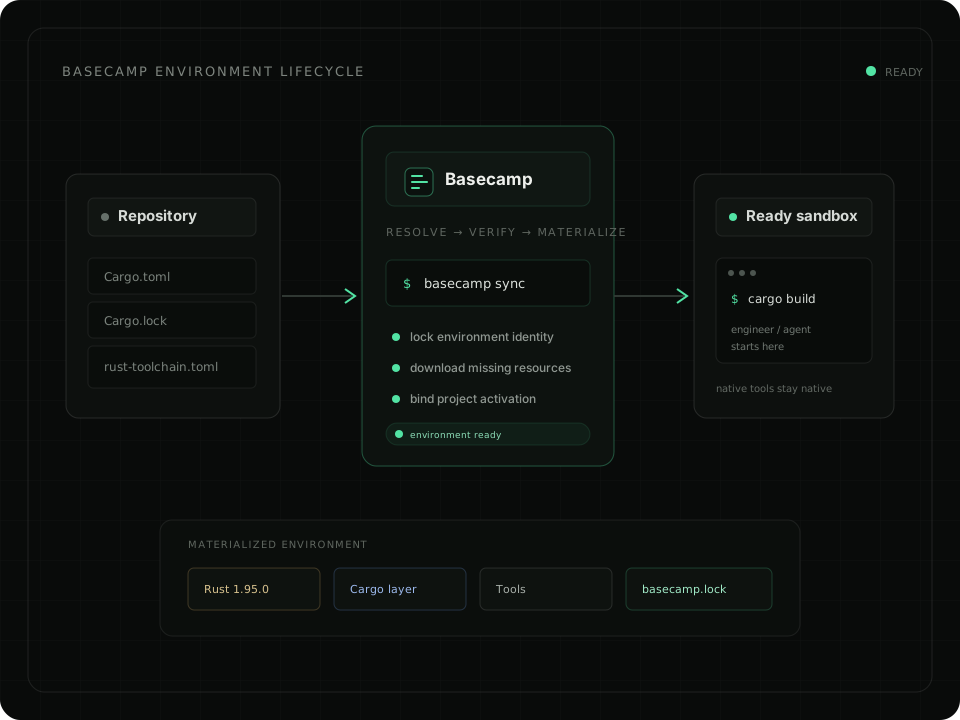
repository
  → sandbox setup phase
  → basecamp sync
  → environment ready
  → agent / engineer phase
  → cargo / pnpm / uv / go / ...
“Before the sandbox” is a lifecycle concept. Basecamp can run inside an already-created sandbox during its setup phase, outside the sandbox while building a reusable template, or on another connected machine before importing an offline bundle.
Three integration patterns
1. Setup hook
When a managed sandbox provides a setup command or initialization phase, run basecamp sync there before handing the environment to the coding agent.
2. Template or snapshot build
When a sandbox platform supports reusable images, templates, or VM snapshots, synchronize Basecamp while producing that reusable base.
3. Offline import
When the execution sandbox is intentionally disconnected from the network, prepare the environment elsewhere and transport it with a Basecamp bundle.
Managed coding-agent sandboxes
Modern coding agents already execute commands inside isolated environments. For example, OpenAI documents a cloud setup stage that runs before the agent stage, and Claude Code on the web runs sessions in isolated sandboxes. Basecamp is designed to occupy the environment-preparation part of that lifecycle, without taking over the sandbox provider's security model.
These names describe the integration pattern; Basecamp v0.5 does not claim first-party adapters for every provider.
Network-off agent phase
# connected preparation environment
basecamp sync
basecamp bundle pack

# isolated sandbox
basecamp bundle unpack project.basecamp
basecamp shell
cargo build --offline --locked
The Rust / Cargo implementation is already tested with an intentionally unreachable Basecamp endpoint after bundle import.
Responsibility boundary
| Basecamp owns | Sandbox owns |
|---|---|
| Environment identity and lock | Isolation and tenancy |
| Runtime / package materialization | CPU, memory, disk limits |
| Verified resources and shared store | Filesystem and network policy |
| Offline bundles and activation | Session lifecycle and execution boundary |